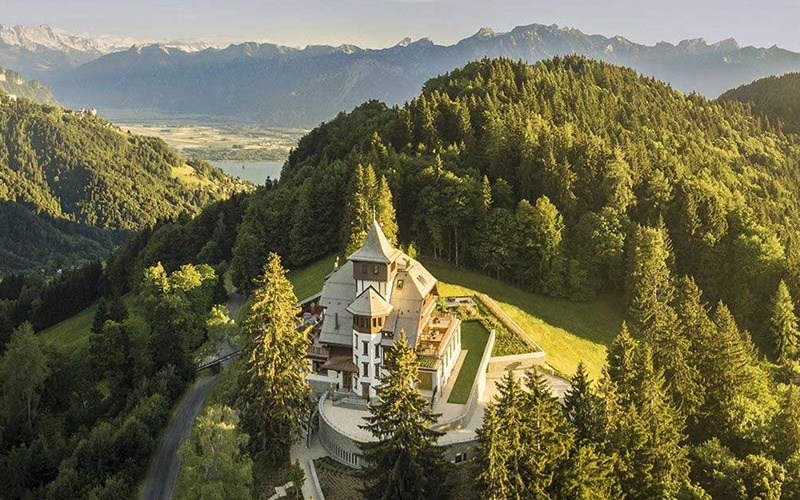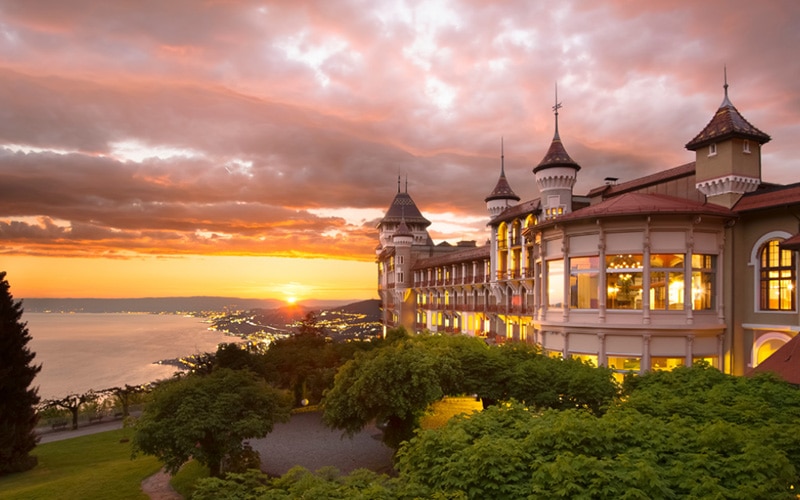



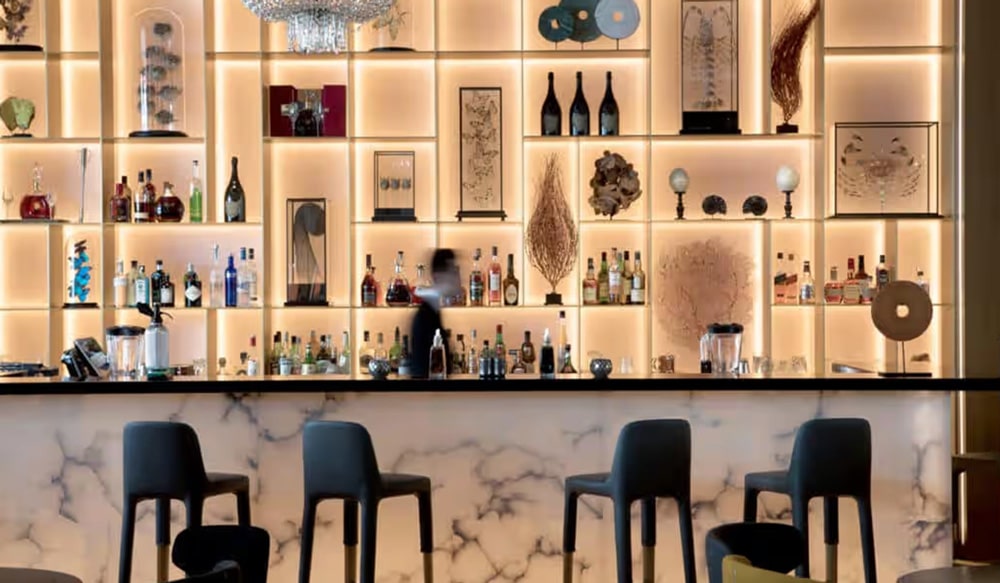

The best hospitality schools in Switzerland are primarily concentrated on the Vaud Riviera. Glion and SHMS, two global benchmarks within the Sommet Education group, cater to profiles focused on hotel management, luxury, and operations. To choose, compare accreditations, the number of mandatory internships, and the specialisation (luxury, entrepreneurship, or traditional hospitality).
Switzerland has established itself as the global benchmark in hospitality management, and this reputation is built on decades of rigorous training, a dense industry ecosystem, and a strategic location at the heart of Europe.
This ranking focuses exclusively on higher-level hospitality programmes, i.e., bachelor’s and master’s degrees. The criteria used are: international academic reputation, the quality of the alumni network, internship arrangements, and the graduate employment rate.
Glion Institute of Higher Education, a global benchmark in luxury management
The Glion Institute of Higher Education regularly ranks among the world’s leading institutions in specialised rankings such as QS and CEOWORLD. Its dual expertise in hospitality and luxury management makes it a distinctive choice for students targeting prestigious hotel groups.
Glion’s bachelor hospitality and master’s programmes are built around a balance between management theory and operational immersion. The Montreux-Riviera and London campuses provide dual exposure, both European and international.
Glion’s alumni network includes more than 18,000 graduates in 150 countries. Partnerships with Four Seasons, Ritz-Carlton, and Mandarin Oriental open up tangible career opportunities from the end of the programme. The employability rate regularly exceeds 90% within six months of graduation.
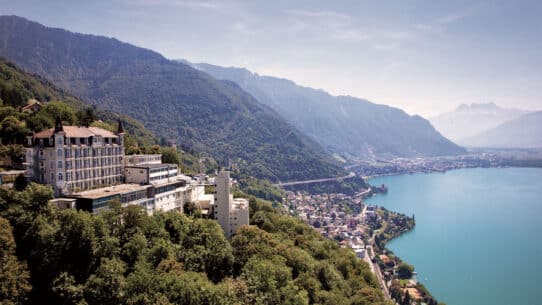
Glion Institute of Higher Education
SHMS Swiss Hotel Management School, the school with two exceptional campuses
The SHMS – Swiss Hotel Management School offers training rooted in the Swiss hospitality tradition, with a rare distinction: its two campuses are fully functioning hotel properties. The Caux site occupies a former Belle Époque palace overlooking Lake Geneva, while the Leysin campus is set in a preserved Alpine environment.
The bachelor’s and master’s programmes in hospitality management include culinary arts and F&B management modules that are rarely available at this level. The immersive teaching approach places students in real-life situations in the campus training restaurants and hotels.
Two hospitality internships of at least six months are mandatory, in Switzerland and internationally. This amount of hands-on experience is a direct advantage on the job market, particularly in Switzerland, where employers value practical skills as much as the degree. SHMS belongs to the Sommet Education group, like Glion, which strengthens the coherence of the professional network accessible to graduates.
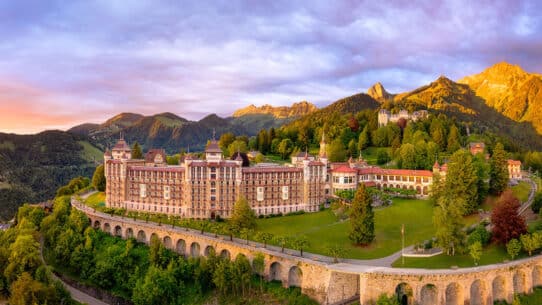
SHMS – Swiss Hotel Management School
Other leading schools in French-speaking Switzerland
The landscape of the best hospitality schools in Switzerland is not limited to the three institutions on the Riviera. Two other institutions deserve to be mentioned in any serious comparison.
The École hôtelière de Lausanne (EHL) has university status and develops significant academic research activity. Its long-standing network and high-end positioning make it an essential reference, particularly for profiles seeking to combine an operational career with an academic perspective.
Les Roches Global Hospitality Education, based in Crans-Montana, offers programmes taught entirely in English and attracts a particularly international student body. Its teaching approach emphasises cultural immersion and mobility.
For international students who are hesitating between a European course of study and a North American programme, it may be useful to consult resources on how to enrol at an American university in Switzerland, as this type of pathway is also available in the region.
Selection criteria for a hospitality school in Switzerland
Choosing among higher-level hospitality programmes in Switzerland requires prioritising several parameters according to one’s career plan.
Reputation and accreditations: the QS rankings, CEOWORLD, and CEO Magazine provide a useful first filter. International recognition of the degrees and industry accreditations will directly determine the value of the qualification in foreign markets.
Professional and alumni network: the size and activity of the alumni network directly influence medium-term employability. Career fairs and partnerships with hotel groups are reliable indicators of graduates’ real-world integration into the job market.
Internships and professional immersion: check the number of mandatory internships, their minimum duration, and the destinations offered. Internship pay in Switzerland is generally attractive compared with European standards.
Facilities and location: the Montreux-Riviera concentrates several institutions in an environment conducive to hospitality training, with a network of local and international companies within easy reach. French-speaking Switzerland also offers a living environment that international students appreciate for its safety and quality of life.
For families building a complete educational pathway in the region, consulting a list of private boarding schools in French-speaking Switzerland can be useful to anticipate the steps leading up to higher education.
Employability and career prospects after a Swiss hospitality school
The graduate employment rate after a bachelor hospitality or a master’s degree at a leading Swiss school generally exceeds 90% within six months of graduation. This figure varies by institution and cohort, but reflects a structural trend linked to global demand for managers trained in hospitality management.
The most common employment sectors are:
- International luxury hospitality (unit management, revenue management, F&B)
- Hotel chain management (development, franchising, asset management)
- Events and MICE (conferences, incentives, corporate seminars)
- Hospitality consulting and tourism real estate development
- Entrepreneurship and start-ups in hospitality and hotel technology
Starting salaries vary depending on degree level, sector, and job location. A bachelor-level graduate joining an international group can generally negotiate a competitive package from their first role, with rapid progression for mobile profiles.
The alumni network is a long-term career asset. Alumni associations regularly organise networking events that maintain ties between generations of professionals. According to industry experts, certification and continuing education are playing an increasingly important role in career progression in international hospitality.
The three flagship institutions of the Vaud Riviera—Glion, SHMS, and HIM—cover distinct and complementary profiles: luxury management and a global network, immersive operational training, or a business and entrepreneurship focus. The most effective approach remains visiting the campuses and attending open days to assess the learning environment directly. The decisive criterion remains the fit between your career plan and the specialisation of the school you choose. Expat families wishing to build a coherent educational pathway from schooling through to higher education will find useful guidance in our guide to international schools in the region.