



A Swiss MBA generally lasts 12 to 18 months, compared with 24 months for a traditional US MBA, which changes the opportunity cost and career pace. Switzerland favours compact formats and a European focus; the United States emphasises length, networks and immersion in its market. The right choice depends above all on the region where you plan to build your career after graduating.
Choosing between an MBA in Switzerland and an MBA in the United States is as much about choosing a career model as an academic programme. Both options train capable managers, but they do not open the same doors and do not require the same time commitment. Here are the differences that truly matter.
Programme length and structure: one year versus two
The most visible difference is the duration. A Swiss MBA most often runs for 12 to 18 months, with intensive or modular formats designed to limit career interruption. A traditional US MBA spans two full years, with a summer internship between the two academic blocks.
This difference in length affects opportunity cost: two years without a full salary costs more than one. In return, the US format leaves time to test a sector through the summer internship—something the more compressed Swiss calendar does not always allow.
- Full-time format: total immersion, generally preferred in the United States
- Part-time or modular format: more common in Switzerland, compatible with professional activity
- Executive MBA format: designed for experienced managers, available on both sides of the Atlantic
- Hybrid format: in-person learning reinforced by remote sequences
Modular and executive formats: a Swiss speciality
Switzerland has developed a strong offering of modular and executive formats, tailored for working managers who do not want to interrupt their professional activity. Several schools in the Vaud Riviera follow this approach, including several graduate schools in French-speaking Switzerland that offer tailored programmes.
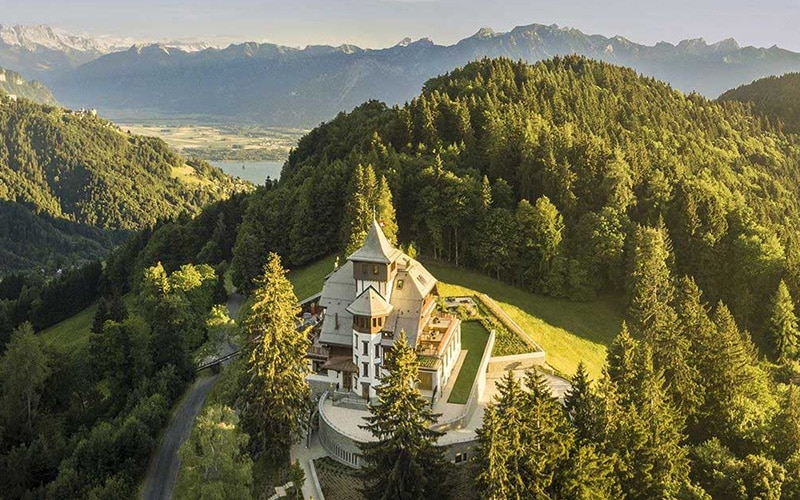
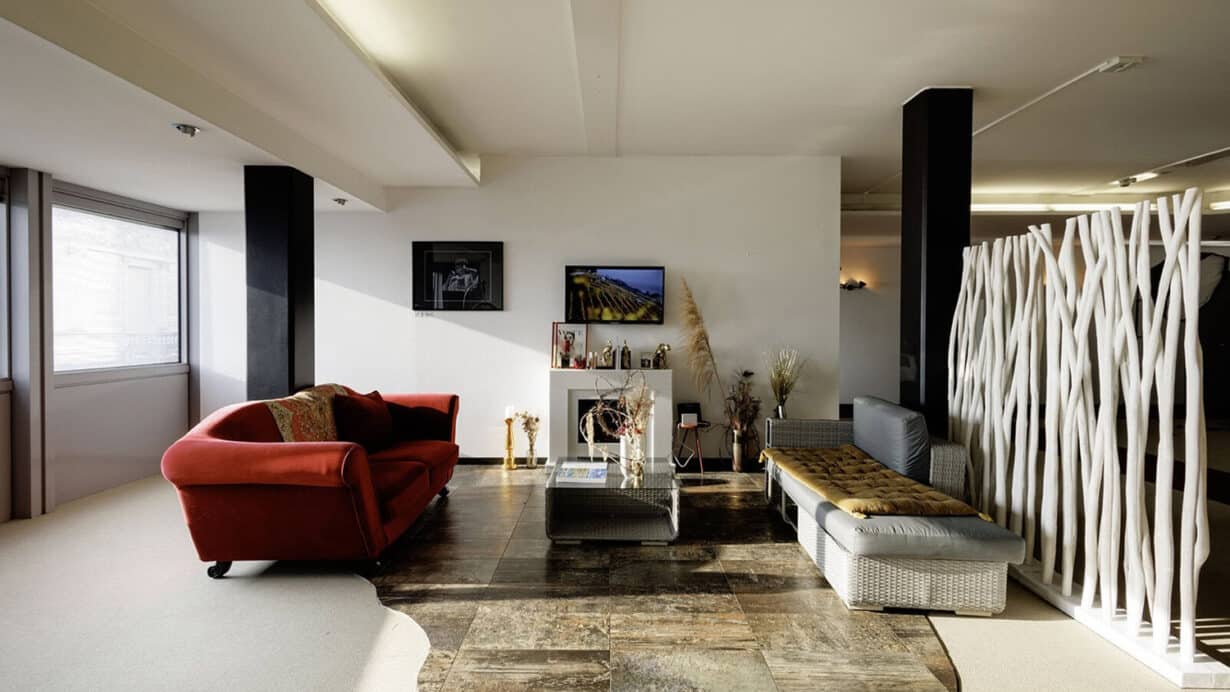
The Swiss School of Higher Education illustrates this philosophy well. This international private higher-education institution based in Montreux offers programmes ranging from pre-bachelor to MBA, as well as an executive master’s and a doctorate, with teaching delivered entirely in English. Its boutique approach translates into small class sizes, designed for individualised support rather than lecture halls. It is an alternative for those seeking an MBA oriented towards business administration, luxury management or entrepreneurship, without the conventions of a traditional US campus.

Swiss School of Higher Education
This deliberately limited size enables direct contact with the teaching staff—an argument often cited by students who have already experienced large university cohorts.
Tuition costs: investment and return on investment
Without going into specific amounts, the cost logic differs markedly between the two markets. In Switzerland, the gaps between private schools and public institutions such as HEC Lausanne are significant, and the shorter duration mechanically limits the overall bill. In the United States, the gap between top-20 global programmes and mid-ranked schools is even wider, and comes with two years of living costs on site.
You also need to factor in indirect costs, often underestimated at the time of choice:
- Student visa fees and administrative procedures
- Housing, generally more expensive in major US cities
- Mandatory health insurance, whose cost varies greatly by country
- Total length of stay, which multiplies fixed costs over two years in the United States
Return on investment depends mainly on the region you are targeting after graduation. An MBA earned in Switzerland tends to support a European or international plan, while a US degree carries more weight in the domestic US market, where rankings such as QS or the Financial Times strongly influence hiring salary bands.
Teaching approach and learning style
Swiss teaching generally favours a practical approach, with integrated internships and a clear proximity to the luxury industry and international hospitality. The US method relies more on the case study method popularised by Harvard, where analysing real business situations structures most courses.
Networking plays a central role in US MBAs, driven by a culture of academic competition among students. In Switzerland, the emphasis is on small class sizes, which foster a more direct relationship between students and professors.
The US approach embodied by a traditional university
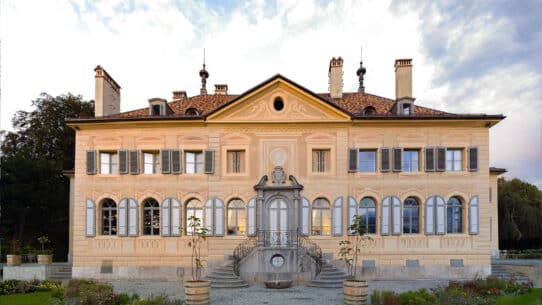
Pepperdine University provides a bridge between the two models. This US university has a presence across six international campuses, including a base in Switzerland, making it possible to follow an American teaching model without leaving Europe. Its MBA programme stands out for small class sizes and personalised support, in line with its historic positioning as a US business school focused on leadership. The school also offers law programmes, which broadens its graduate offering.
Pepperdine University
To explore this hybrid model further, our article on joining an American university in Switzerland details the admissions requirements and how these offshore campuses operate.
To illustrate the diversity of Switzerland’s business and hospitality offering, schools such as SHMS or Glion complement this landscape with approaches centred on the hotel sector.
Professional network and alumni
The network built during an MBA often matters as much as the degree in the rest of a career. In Switzerland, the footprint remains largely European, with a strong presence in luxury, hospitality, and Geneva or Zurich finance. The US network operates on a different scale, with the historic weight of alumni in Silicon Valley, on Wall Street and in major North American companies.
This difference in scale has a practical consequence: for a career plan centred on Europe, the local Swiss network may prove more useful than a US network that is too geographically distant. Conversely, aiming for a long-term move to the United States makes the US network difficult to bypass.
Employability and career outcomes by target market
Swiss MBA degrees enjoy strong recognition in Europe and internationally, particularly in luxury and hospitality. US degrees retain a clear advantage for returning to, or establishing a career in, the United States, where recruiters particularly value programmes from their own market.
International rankings such as the QS Global MBA provide useful indications of short-term employability after graduation, even if these data vary by school and cohort. The most promising sectors remain broadly the same on both sides of the Atlantic:
- Luxury and premium consumer goods
- International hospitality and hospitality management
- Finance and private banking
- Strategy consulting
- Technology and innovation
To go further on this topic, our analysis of career outcomes after an MBA details the trajectories observed by sector.
How to choose based on your career plan
Choosing between a Swiss MBA and a US MBA is not simply a question of prestige. Above all, it is about aligning the programme with a concrete career plan. A few criteria can help you decide:
- Target region: Europe and international—more Swiss; US market—more US MBA
- Available budget and tolerance for the opportunity cost linked to duration
- Time available: one year or two, with or without a career break
- Target sector: luxury and hospitality—more Switzerland; tech and major US groups—more United States
For a career plan rooted in Europe or Switzerland, a local MBA is often the most relevant choice, notably thanks to the diversity of formats available in French-speaking Switzerland. For an objective clearly oriented towards the US market, a local MBA in the United States retains an advantage that is difficult to bypass. In between, profiles aiming for a mobile international career benefit from comparing both models in light of accreditation criteria—a topic that this resource clarifies usefully before any application.