



A successful Hospitality Manager masters ten essential skills: leadership, customer service, stress management, multilingualism, financial analysis, strategic vision, adaptability, technical expertise, communication, and passion. These qualities are developed through education, field experience, and a constant commitment to excellence.
The hospitality and catering industry leaves no room for guesswork. On the Vaud Riviera, as in the grand hotels of the world’s capitals, establishments seek managers capable of combining interpersonal skills and hard management skills with equal rigor.
Here are the ten qualities that distinguish an ordinary manager from a true hospitality management professional.
Empathetic leadership at the heart of the profession
In the hotel industry, leadership is not imposed; it is inspired. A good manager unites teams composed of chefs, receptionists, and housekeeping staff—often from dozens of different nationalities—around common goals.
Managing generational diversity represents a daily challenge. Between the expectations of a Gen Z team, the professional benchmarks of millennials, and the experience of seniors, the manager must adapt their communication style without losing consistency.
A concrete example: during a peak in bookings on a summer weekend, a conflict breaks out between the reception desk and the F&B department. A good manager intervenes methodically, without rushing, establishing the facts before addressing the emotions.
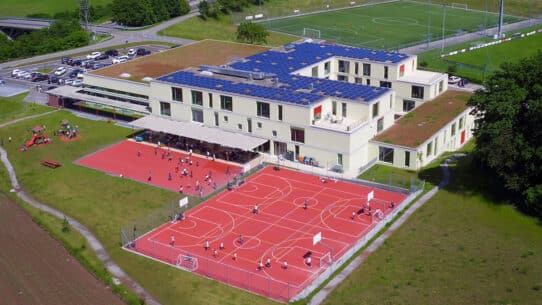
The HIM Business School, located on the Vaud Riviera, has built its pedagogical approach precisely around these realities. Students are faced with real-life scenarios from their very first weeks, with a particular emphasis on the managerial codes expected by Generation Z. The programs include professional internships that allow students to test this leadership in authentic conditions, not just in the classroom.
HIM Business School
Customer service excellence as a compass
Customer satisfaction is not just managed; it is anticipated. The best hospitality managers do not simply respond to needs: they anticipate them before they are even voiced. A slightly cooler room for a regular Japanese guest, a lactose-free menu prepared without being requested—it is these details that create lasting loyalty.
Complaint management is a skill in its own right. A well-handled complaint systematically turns into an opportunity: a guest who leaves satisfied after an incident often becomes more loyal than one who never had a problem.
Swiss hospitality standards add an extra layer of requirement: absolute punctuality, irreproachable discretion, and refinement in every detail. These are the codes that define the international reputation of Swiss hospitality.
From first contact to lasting loyalty
The complete guest journey begins long before arrival (pre-booking, digital communication, personalized confirmation) and continues after departure (CRM follow-up, satisfaction surveys, targeted return offers).
Mastery of Customer Relationship Management (CRM) tools is therefore inseparable from the role of the modern manager. These platforms allow for the recording of preferences and the industrialization of personalization on a large scale.
Stress management and operational resilience
The hotel industry operates 365 days a year, 24 hours a day. Seasonal peaks, simultaneous events, and technical unforeseen circumstances are part of daily life, not the exception.
Operational resilience is based on several fundamental principles:
- Prioritization: distinguishing the urgent from the critical in seconds
- Delegation: trusting trained teams rather than centralizing everything
- Rapid decision-making: in situations of overbooking or technical failure, hesitation costs more than an error
- Preventive culture: anticipating crisis scenarios rather than reacting to them
A manager who loses their composure under pressure drags their teams into the same spiral. Emotional control is not a luxury: it is a professional skill in its own right in the hospitality industry.
Multilingualism and cultural intelligence
Mastery of at least three to four languages (French, English, German, and ideally Mandarin or Arabic) is now a prerequisite for advancing in international hospitality. But language alone is not enough.
Cultural intelligence involves understanding the implicit expectations of each guest according to their origin: the discretion expected by a Japanese guest, the relational warmth valued by a Latin American guest, the formality appreciated by certain European markets. These nuances make the difference between a correct service and a memorable experience.
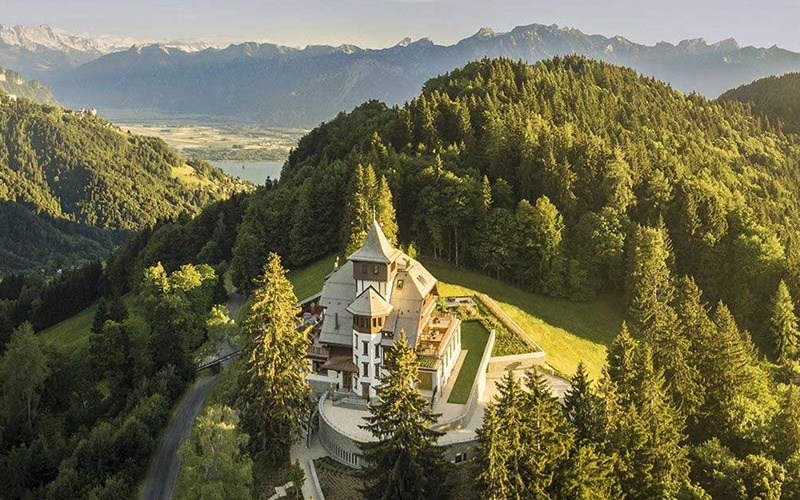
The SHMS – Swiss Hotel Management School prepares students precisely for these realities. With its two campuses in Caux and Leysin, the school welcomes students from all over the world, creating a naturally multicultural environment that reproduces field conditions. The bachelor’s and master’s programs are recognized globally, and daily immersion in a multilingual context constitutes permanent training in cultural intelligence.

SHMS – Swiss Hotel Management School
Financial and analytical skills
A manager who does not read their numbers is flying blind. Mastery of key financial indicators—RevPAR, ADR, occupancy rate, food cost, labor cost—is essential for making informed daily decisions.
The expected skills cover several areas:
- Reading and interpreting financial statements (P&L)
- Rigorous control of operational costs
- Yield management and revenue management strategies
- Budgeting and seasonal financial forecasting
Driving performance through numbers
Operational dashboards allow for real-time performance tracking and the adjustment of actions without waiting for monthly reports.
Competitive analysis and benchmarking complete this vision: knowing your position in the local and regional market allows for the relevant refinement of rates, offers, and distribution strategies.
Strategic vision and innovation
Trends evolve quickly: slow travel, sustainability, wellness, personalization through artificial intelligence. A manager who remains focused on operations without looking toward the strategic horizon risks managing an outdated model.
Strategic vision involves anticipating market developments, repositioning the offering before the competition forces it, and innovating in the guest experience—whether through the digitalization of services or new forms of personalization.
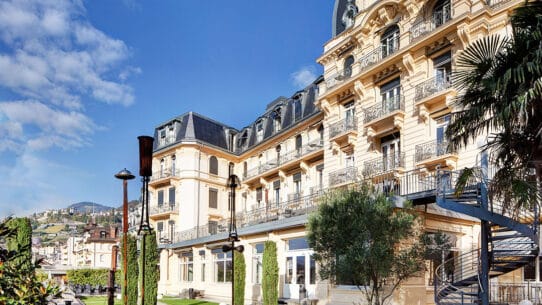
The Glion Institute of Higher Education trains managers capable of integrating this strategic dimension from the start of their careers. Specializing in hospitality and luxury management, the institution offers bachelor’s and master’s programs that combine academic rigor with a field-oriented approach. Glion graduates are found in management positions at the world’s largest hotel groups, which testifies to the strength of the pedagogical approach developed on the Vaud Riviera.
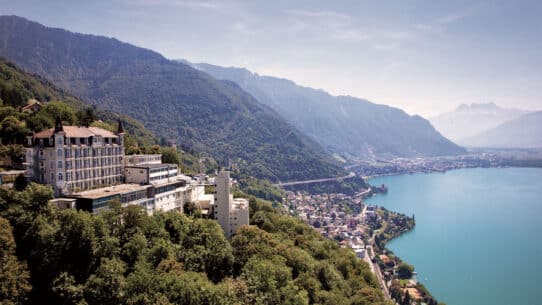
Glion Institute of Higher Education
Adaptability, communication, and technical skills
These three qualities form an inseparable triptych in the daily practice of the profession.
Adaptability is demonstrated when facing new regulations, health crises, or technological transformations. An agile manager guides their teams through change without generating unnecessary resistance. Versatility—the ability to intervene in all departments if necessary—remains a highly valued quality by employers in the sector.
Technical skills include mastery of PMS (Property Management Systems), knowledge of HACCP standards, schedule management, and an understanding of support roles: F&B, housekeeping, maintenance, and concierge. A manager who does not understand the work of their teams cannot lead them effectively.
Communication operates on several levels: downward to teams (clarity, leading by example), upward to management (reporting, alerts), and lateral with partners and suppliers (negotiation, diplomacy). Managing e-reputation and online reviews is now a full-fledged dimension of crisis communication in the hotel industry.
Passion and professional ethics
Without a sense of vocation, the other nine qualities will falter. Hospitality requires total commitment—irregular hours, weekends, public holidays—which can only be sustained over time if the profession is truly chosen.
Professional ethics translate into integrity in relationships with teams, transparency with management, and respect for guests in all circumstances. Managerial exemplarity is not an abstract concept: teams observe and reproduce the behavior of their managers.
The question of work-life balance deserves to be addressed clearly. Burnout threatens managers who confuse commitment with permanent sacrifice. The professionals who last are those who have learned to preserve their energy over the long term without ever compromising the quality of service.
These ten qualities do not function in isolation: they form an ecosystem in which each skill reinforces the others. Leadership without financial rigor is exhausted; strategic vision without adaptability remains theoretical; service excellence without resilience collapses at the first unforeseen event.
The good news: none of these qualities are innate. All are developed through experience, continuous training, and regular exposure to demanding environments. The Vaud Riviera, with its world-renowned hotel establishments and internationally recognized management schools, offers a particularly fertile training ground for those wishing to practice this profession at the highest level. Industry experts agree that graduates trained in French-speaking Switzerland enjoy a significant competitive advantage in the international hospitality market.