




Alcohol withdrawal in French-speaking Switzerland takes place in facilities with varied profiles: public hospitals, private psychiatric clinics, or outpatient centers. The Vaud Riviera hosts several specialized addiction treatment centers, offering medical care for the acute phase followed by psychological support over several weeks. The choice of center primarily depends on the severity of the addiction, any associated disorders, and the desired level of confidentiality.
The Lake Geneva region has a limited but diverse range of facilities dedicated to addiction treatment, from university hospital services to private psychiatric clinics. This article presents the different types of care available, the stages of a withdrawal program, and the criteria to consider before choosing an institution.
Different Types of Alcohol Withdrawal Care
Alcohol withdrawal encompasses two distinct temporalities. The first is the physical withdrawal phase, which is acute and generally short, during which the body sheds its dependence under medical supervision. The second is long-term psychological support, which addresses the underlying causes of addiction and prevents relapse.
Three formats coexist in French-speaking Switzerland:
- Inpatient hospitalization, with on-site accommodation for the entire program duration
- Day hospital, allowing intensive care while returning home in the evening
- Outpatient follow-up, reserved for less severe situations or as a continuation of hospitalization
In Switzerland, public hospital care is generally covered by basic health insurance (LAMal), while stays in private clinics are typically covered by supplementary insurance. The university hospitals in French-speaking Switzerland, such as CHUV in Lausanne, offer a useful point of comparison to the specialized private offerings on the Vaud Riviera.
Why the choice of facility influences program duration
The duration of a withdrawal program is never standardized. It depends on the severity of the addiction, any psychiatric comorbidities (depression, anxiety, eating disorders), and the patient’s social environment. Support in a specialized private clinic often allows for adapting the length of stay to these parameters, unlike more standardized hospital pathways.
Specialized private addiction clinics on the Vaud Riviera
The Vaud Riviera hosts private facilities dedicated to addiction rehabilitation, offering in-depth medical and psychiatric care in a discreet setting designed for an international clientele.
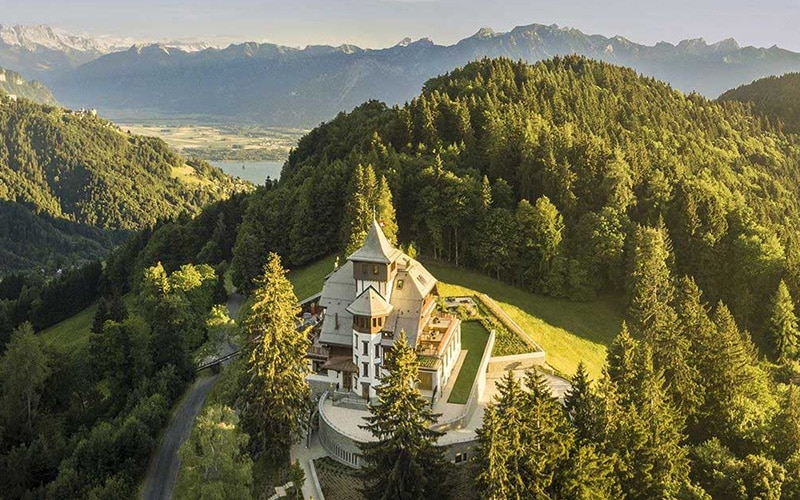
Clinic Les Alpes is a private psychiatric clinic located in the hills above Montreux, specializing in the rehabilitation of addictions and associated mental health disorders. The facility treats alcohol and substance dependencies, alongside issues such as burnout, depression, anxiety, and eating disorders. Each patient benefits from a personalized program combining medical assessment, psychiatric evaluation, and individualized therapeutic follow-up, in a residential setting overlooking Lake Geneva. The multidisciplinary team includes doctors, psychiatrists, addiction specialists, and therapists.

Clinic Les Alpes
This type of facility differs from public hospitals due to its smaller staff size, which allows for more extensive individualized follow-up, as well as the integration of complementary therapies in addition to conventional medical treatment.
Key stages of a successful alcohol withdrawal program
A structured alcohol withdrawal program unfolds in three successive phases, each addressing a specific therapeutic objective.
- Medical detoxification: the acute phase during which withdrawal symptoms are managed under constant medical supervision, typically lasting about ten days
- Psychological stabilization: implementation of individual and group therapies to address the mechanisms of addiction
- Reintegration and post-care follow-up: preparation for returning to daily life and establishment of a relapse prevention plan
The overall duration of a complete program varies according to the patient’s needs, but most often spans several weeks when the addiction has been long-standing or is associated with other disorders.
The role of support network and outpatient follow-up after discharge
Discharge from the clinic does not mark the end of care. Maintaining abstinence largely relies on:
- Participation in regular support groups
- External addiction follow-up with a psychiatrist or referring physician
- Gradual and supported professional reintegration
The involvement of close family and friends, when possible, remains an important stabilizing factor in the months following discharge.
How to choose the right withdrawal center for your situation
The choice of a withdrawal facility is based on several concrete criteria, ideally to be evaluated with a healthcare professional before any decision.
- The severity of the addiction and the potential existence of medical complications
- The presence of associated disorders, such as anxiety, depression, or burnout
- The level of confidentiality offered, particularly sought after by an international clientele
- The possibility of personalized follow-up rather than a standardized pathway
The treating physician or referring psychiatrist guides patients towards a hospital facility, a specialized private clinic, or outpatient follow-up, to avoid an improperly scaled program.
Alcohol withdrawal and other forms of dependence: what are the differences in care in French-speaking Switzerland
Alcohol withdrawal shares several therapeutic principles with the care of other dependencies, but some medical aspects differ. Withdrawal from opiates or certain psychotropic medications, for example, requires specific substitution protocols. Readers concerned by other substances can consult the withdrawal centers specialized in other dependencies.
Beyond addiction treatment, French-speaking Switzerland also offers a broader range of rehabilitation clinics in Switzerland for needs related to physical rehabilitation. This diversity is part of a larger context of medical tourism on the Vaud Riviera, a region that has attracted an international clientele seeking premium and discreet care for several years.
For any questions regarding Swiss policy on addictions and public health, the Federal Office of Public Health is a complementary reference resource to these private establishments.