



Yes, a Swiss hotel school diploma is internationally recognized, provided that the institution holds the appropriate accreditations. This recognition is based on international academic certifications, a harmonized credit system, and a strong reputation among employers in the world’s major hotel markets. To maximize this recognition, it is advisable to verify the specific accreditations of the chosen school before enrolling.
Switzerland holds a unique position in global hospitality education. Its higher education institutions specializing in hospitality management consistently rank at the top of international rankings, and their graduates are recruited across five continents.
For an international student, the key question remains: Will this degree be recognized in my home country or in the country where I plan to work?
The answer depends on three factors: the school’s international accreditations, the program’s alignment with European standards (the BSL system), and the destination country’s specific validation procedures.
International accreditations that ensure the recognition of degrees
International accreditation certifies that a program meets academic quality standards set by a recognized independent body. For Swiss hotel schools, there are two main types of accreditation.
U.S. accreditations, notably the ACBSP (Accreditation Council for Business Schools and Programs) and the NEASC (New England Association of Schools and Colleges), give the degree global recognition. In particular, they facilitate further study at North American universities and enhance the degree’s recognition among Anglo-Saxon employers.
Through partnerships with universities such as the University of Derby, British accreditations enable students to earn jointly awarded degrees that are recognized throughout the Commonwealth.
The ECTS (European Credit Transfer and Accumulation System) is a third key factor: it ensures the transferability of academic credits within the European Higher Education Area and beyond. If you plan to go on to pursue a master’s degree at an American university in Switzerland, these credits are generally recognized without any additional steps.
- ACBSP: business school accreditation recognized in the United States and in more than 60 countries
- NEASC: a U.S. regional accreditation, one of the most rigorous
- British university accreditation: joint awarding of UK degrees
- ECTS: European and International Academic Mobility
The Swiss higher education system: bachelor’s, master’s, and equivalencies
Switzerland has aligned its higher education system with the Bachelor’s-Master’s-Doctorate (BMD) structure resulting from the Bologna Process. This harmonization ensures direct equivalencies with the education systems of the European Union and the EFTA.
Bachelor’s and Master’s Degrees in Hospitality Management: What Is Their Academic Value?
A Swiss bachelor’s degree in hospitality management corresponds to Level 6 of the European Qualifications Framework (EQF), which is the bachelor’s degree level. A master’s degree in hospitality management corresponds to Level 7 of the EQF, which is equivalent to a Master 2 degree.
It is important to distinguish between degrees awarded by Universities of Applied Sciences (UAS), which have a more vocational focus, and traditional university degrees. Both types of degree are internationally recognized, but the UAS track is particularly valued by employers in the hospitality industry for its practical orientation.
SHMS Swiss Hotel Management School: A Model for Accreditation
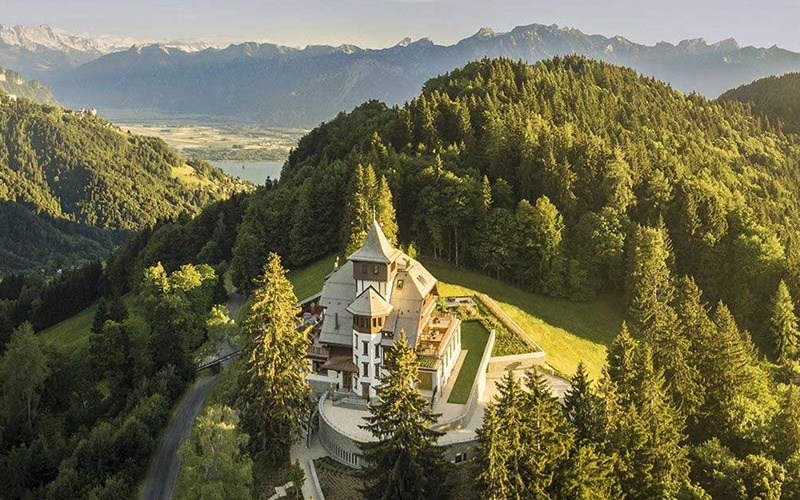
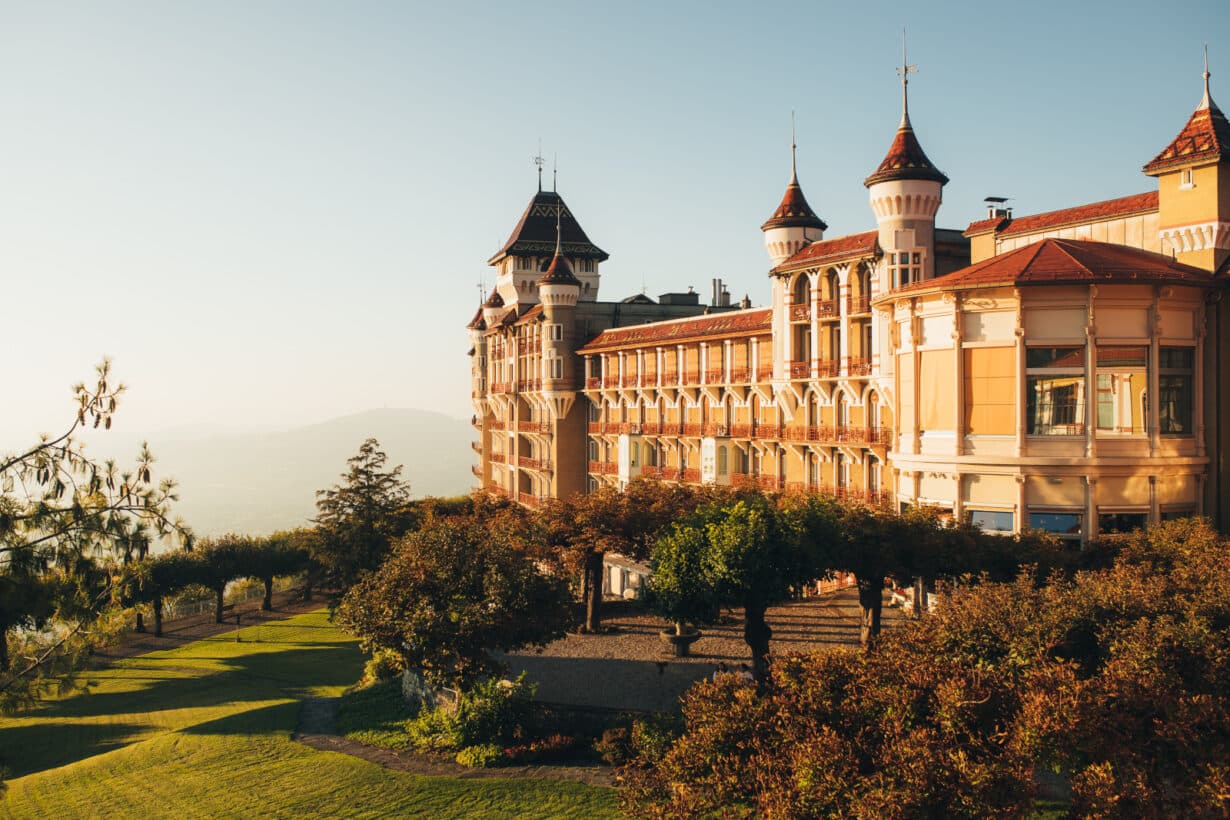
SHMS Swiss Hotel Management School is a prime example of what a Swiss hospitality degree with international reach truly means. The school holds multiple American and British accreditations, making its programs among the most recognized globally. Its educational approach combines theoretical training in hotel management with intensive practical internships at renowned partner establishments. The campuses in Caux and Leysin offer an immersive learning environment rooted in the Swiss mountain hospitality industry. SHMS graduates earn bachelor’s and master’s degrees validated by independent organizations, which facilitates their academic and professional mobility in over 50 countries.

SHMS – Swiss Hotel Management School
Other schools in the Swiss hospitality sector, such as the Glion Institute of Higher Education, share this approach to multiple accreditations and contribute to the sector’s collective reputation.
Global Rankings and Reputation: Why Employers Value These Degrees
The QS World University Rankings, CEO World Rankings, and specialized rankings in hospitality management consistently place Swiss schools among the world’s top 10. This consistent presence is no small matter: it directly influences the hiring decisions of human resources departments at international hotel groups.
Switzerland’s reputation inthe luxury hospitality industry dates back to the late 19th century, a time when the Vaud Riviera was already welcoming a discerning international clientele. This long history has shaped a body of expertise that has been passed down from generation to generation.
The alumni network is an often-underestimated asset. Graduates of Switzerland’s leading hotel management schools hold executive positions at companies such as Marriott, Accor, Kempinski, and Four Seasons. This global network serves as a mark of quality for recruiters.
International Employability Rates and Labor Market Integration
The employment rate for graduates of Switzerland’s top hospitality schools exceeds 90% within six months of graduation. This figure reflects both the quality of the programs and the sustained global demand within the industry.
The sectors involved go far beyond the traditional hospitality industry:
- Luxury hotels and international luxury resorts
- Events and MICE (Meetings, Incentives, Conferences, Exhibitions)
- Business aviation and premium airlines
- Luxury Cruises
- Hotel Consulting and Asset Management
International internships: a key to professional recognition
Swiss hospitality programs typically include a mandatory internship of at least six months, often completed abroad. Employers value this hands-on experience just as highly as the academic degree itself.
Partnerships with groups such as Marriott, Four Seasons, Mandarin Oriental, and Rosewood give students direct access to the operational standards of the global hospitality industry. Graduates who have completed internships in these settings enter the job market with immediate professional recognition, regardless of where they choose to work.
Validation and equivalence procedures by country of destination
The academic recognition of a foreign degree follows different procedures depending on the geographic region. It is helpful to distinguish between automatic recognition and recognition based on a review of the application.
Recognition in the European Union and the EFTA
European Directive 2005/36/EC on the recognition of professional qualifications applies to Swiss degrees under the bilateral agreements between Switzerland and the EU. The ENIC-NARIC network makes it possible to obtain a certificate of academic equivalence in each member country.
To practice a regulated profession in the EU with an accredited Swiss degree, no cumbersome administrative procedures are generally required.
Outside the European Union, procedures vary:
- North America: Using WES (World Education Services) for a degree evaluation
- Asia-Pacific: AICE (Australian International Credential Evaluators) or local organizations, depending on the country
- Middle East: Recognition by local ministries of education, often facilitated for ACBSP-accredited degrees
- Post-Brexit United Kingdom: Using UK ENIC for Equivalency
In any case, two documents are essential:the Hague Apostille affixed to the original diploma, and certified translations into the language of the destination country. For families considering an internationally recognized education program in Switzerland, these validation procedures are a key factor in their decision-making process.
Continuing your education after graduating from a Swiss hotel management school
A bachelor’s degree from an accredited Swiss hotel management school opens doors to top-tier university master’s programs. Institutions such as Cornell University, Oxford Brookes, and ESSEC regularly admit Swiss graduates into continuing education or dual-degree programs.
Specialized MBAs in hospitality, MSc programs in luxury brand management, or in hotel real estate are natural next steps after completing a Swiss bachelor’s degree. Pepperdine University, which has a campus in Lausanne, for example, serves as a gateway to accredited American programs right here in Switzerland.
These post-degree pathways confirm that the international recognition of a Swiss degree extends beyond the job market to the academic sphere as well, offering long-term career flexibility. To deepen your understanding of the international standards governing these degrees, specialized resources allow you to precisely situate each degree within the global academic hierarchy.