



Switzerland, and particularly the Montreux Riviera, is home to renowned establishments in cosmetic surgery and anti-aging medicine. Three criteria matter above all: the surgeon’s FMH qualifications, the available technical facilities, and the quality of post-operative follow-up. This article distinguishes clinics practicing invasive surgery from those specializing in non-invasive revitalization, to guide your choice according to your actual needs.
How to evaluate a cosmetic surgery clinic in Switzerland
Choosing a clinic for a cosmetic procedure requires observing several concrete criteria, rather than relying on an establishment’s marketing.
The surgeon’s FMH qualifications remain the first filter to apply. In Switzerland, a title of FMH specialist in plastic, reconstructive, and aesthetic surgery attests to supervised training and a nationally recognized competency check. This title is distinct from simple aesthetic medicine certifications, which cover non-surgical acts such as injections.
- Practitioner’s FMH qualifications and titles
- The clinic’s technical facilities and infrastructure
- Pre- and post-operative support
- Transparency regarding expected results and risks
It is also necessary to distinguish a clinic specialized in cosmetic surgery, which performs invasive acts under anesthesia, from a non-invasive anti-aging medicine center, oriented towards revitalization and health check-ups. The two approaches meet different needs. The strict regulation of medical professions in Switzerland also explains the country’s attractiveness for international patients.
Invasive surgery vs. non-invasive aesthetic medicine
Invasive cosmetic surgery includes procedures under general or deep local anesthesia (rhinoplasty, liposuction, facelift) and involves recovery time with structured medical follow-up. Non-invasive aesthetic medicine, conversely, focuses on revitalization protocols that do not require an operating room. This distinction structures the landscape of clinics and establishments in the Vaud Riviera, where these two complementary approaches coexist.
Laclinic-Montreux, a benchmark in cosmetic surgery and medicine
Laclinic-Montreux has established itself over several years as a national and international reference for cosmetic surgery and medicine.
Founded in 2002 by Dr. Michel Pfulg, the clinic brings together a department of plastic and reconstructive surgery, aesthetic medicine specialists, a dental center, as well as experts in predictive and anti-aging medicine. Dr. Pfulg is a founding member of the Swiss Society of Aesthetic Surgery and a member of several international societies of plastic and reconstructive surgery. The clinic’s approach prioritizes procedures such as rhinoplasty, liposuction, or facelifts, with a focus on natural results and discretion.

Laclinic-Montreux
The clinic distinguishes itself through its multidisciplinary positioning, which combines surgery, aesthetic medicine, and dental care within the same structure, with coordinated follow-up between specialists.
Clinique La Prairie, Swiss excellence in anti-aging medicine and revitalization
On a completely different note, Clinique La Prairie occupies a special place in the premium healthcare landscape in Clarens-Montreux. Founded in 1931 by Professor Paul Niehans, a pioneer in cellular therapy, it has established itself as a world reference in preventive medicine and longevity care. The establishment built its reputation on its historic revitalization program, which combines advanced diagnostics and personalized medical protocols, without resorting to surgery. More than 50 specialists collaborate there to offer in-depth health check-ups and recommendations tailored to each profile.

Clinique La Prairie
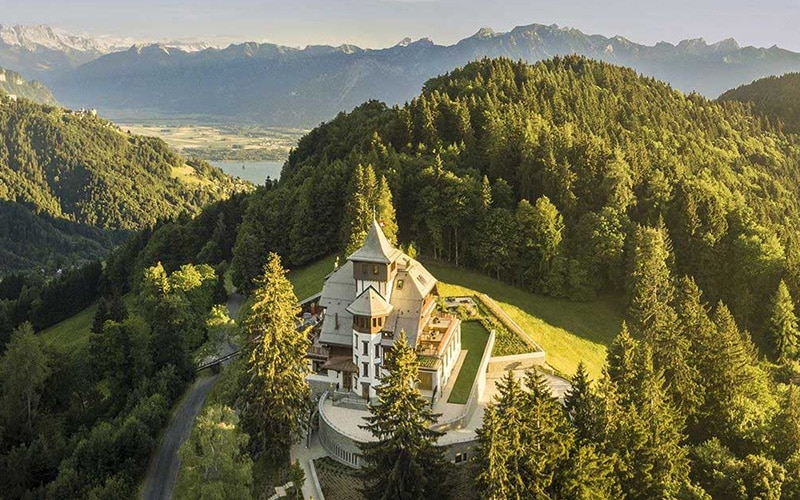
Clinique La Prairie positions itself as a complement to a cosmetic surgery approach rather than a substitute: its field of expertise remains non-invasive anti-aging medicine, premium health check-ups, and cellular revitalization. The site facing Lake Geneva combines a medical center, a wellness area, and high-end hotel infrastructure, designed for preventive stays rather than surgical convalescence.
Other leading Swiss clinics for cosmetic surgery
Beyond the Montreux Riviera, Switzerland has other recognized hubs in cosmetic surgery and medicine. Geneva and Zurich host several specialized private clinics, supported by the presence of medical faculties and university hospital centers. The Crans-Montana region, oriented towards a seasonal international clientele, also offers addresses dedicated to aesthetic medicine.
On the Vaud Riviera, Clinique CIC Montreux completes this landscape with a multidisciplinary medical and surgical offering, without specifically positioning itself in elective cosmetic surgery.
French-speaking vs. German-speaking clinics, different approaches
Establishments in French-speaking Switzerland, like those on the Montreux Riviera, often focus on a limited clientele and personalized care in a discreet setting. German-speaking structures, particularly in Zurich, rely more on high activity volumes and integrated technical facilities within large medical centers. These two philosophies meet different expectations, without either being superior on a medical level.
Choosing your clinic according to your aesthetic needs
The choice of a clinic depends above all on the nature of the planned intervention. Invasive surgery, such as that practiced by Laclinic-Montreux, requires an FMH surgeon, appropriate technical facilities, and rigorous post-operative follow-up. A revitalization or anti-aging medicine approach, such as that offered by Clinique La Prairie, responds to a preventive and complementary logic, without surgical acts.
In the case of major cosmetic surgery, such as a facelift or liposuction, a stay in rehabilitation clinics for post-operative follow-up can be relevant to support convalescence.
Before committing, a few questions should be systematically asked of the intended establishment:
- Does the surgeon hold an FMH title in plastic, reconstructive, and aesthetic surgery?
- Does the establishment offer verifiable examples of before/after results?
- What post-operative follow-up is planned, and for how long?
- Does the clinic have technical facilities adapted to the planned intervention?
These safety criteria align with recommendations formulated by specialists in the field, who insist on the importance of rigorous medical supervision before any surgical intervention.