



The cost of a school year at a Swiss boarding school ranges from CHF 30,000 to CHF 120,000, depending on the type of school, its reputation, and the services included. This wide range is due to significant structural differences: the programs offered, location, class size, and level of personalization. Here’s what you need to know to estimate your budget realistically.
For families considering sending a child to school in Switzerland, the first instinct is often to compare the raw figures. However, the fee structure of a Swiss boarding school is rarely transparent at first glance. The listed price rarely covers all actual expenses.
Before going into detail, you can review the list of private boarding schools in French-speaking Switzerland to get an overview of the available schools and identify those that meet your expectations.
Components of the annual cost of boarding school in Switzerland
Tuition and basic boarding fees
The basic annual tuition fee for a Swiss boarding school generally includes two components: academic tuition and full board.
The academic portion includes access to classes, essential course materials, and internal exams. Full board covers accommodation in a single or shared room, meals, and, in most cases, basic laundry service.
The most affordable schools tend to be in an affordable price range, while boarding schools with a strong international reputation and low student-to-teacher ratios charge fees well above the market average.
Services included in the annual package
What the package covers varies from one facility to another. It generally includes:
- Academic guidance and personalized support for students
- Extracurricular activities offered as part of the standard program
- Access to community facilities (library, gyms, laboratories)
- Basic accident insurance
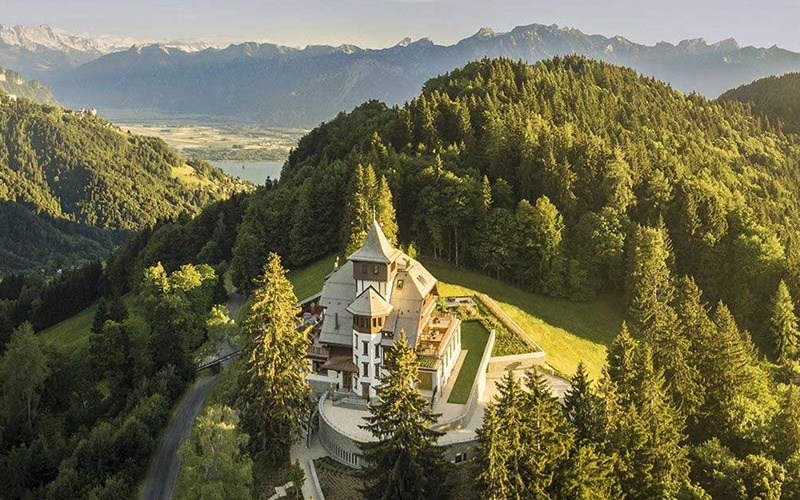
The Monte Rosa Institute, located in Montreux, is a prime example of the benefits of small boarding schools. With a deliberately family-like atmosphere, the school welcomes students aged 8 to 19 into several distinct programs: American High School, British A-Levels, and the Swiss curriculum. This diversity of curricula allows each family to choose a path tailored to the student’s academic goals. The school’s intimate size fosters individualized support, which is reflected in the structure of the tuition package offered.
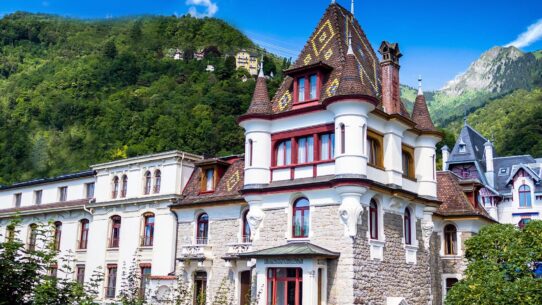
Institut Monte Rosa
Additional costs to expect
Optional extracurricular activities
Optional activities are often the most variable and least anticipated expense. Depending on the school and the student’s choices, you should budget between CHF 5,000 and CHF 15,000 per year to cover:
- Specialized sports: skiing, horseback riding, golf, tennis, sailing
- Private music or art lessons
- School trips and organized cultural outings
- Themed camps during the holidays
These activities are an integral part of the boarding school experience, and students often play a major role in them. Underestimating this expense is one of the most common mistakes made when drawing up a budget.
Other related costs
In addition to the activities, there are several practical expenses that come up throughout the year:
- Uniforms and specific attire required by the school
- Personal supplies, computer equipment, or tablets
- Medical expenses not covered by basic insurance
- Transportation for family pickups (at the beginning and end of each quarter)
- Pocket money for everyday personal expenses
These additional expenses can amount to several thousand francs, depending on the family’s location and the student’s lifestyle.
Factors that influence the total cost
Reputation and International Accreditations
Boarding schools that offer internationally recognized programs —such as the IB (International Baccalaureate), British A-Levels, American High School Diploma, or IGCSE—invest more in human and educational resources. This results in higher tuition fees, which are justified by:
- A more favorable teacher-to-student ratio
- Appropriate facilities (laboratories, sports centers, modern housing)
- Direct recognition by Anglo-Saxon and European universities
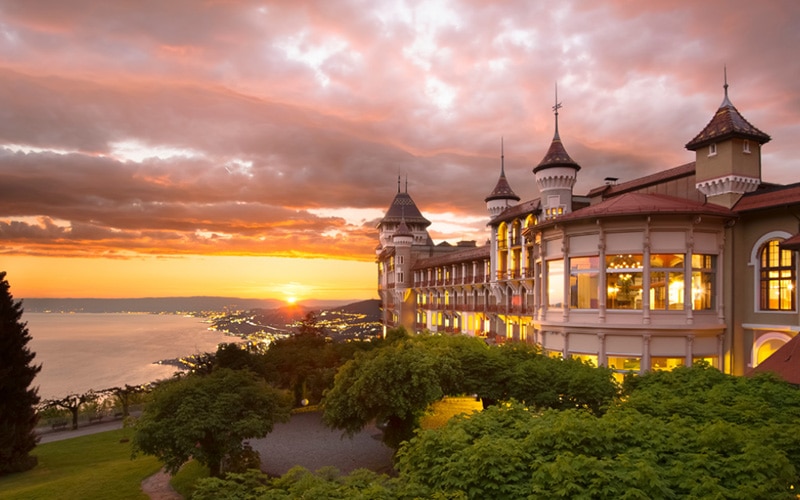
Surval Montreux stands out among Swiss boarding schools for its exclusive focus on girls. The school offers IGCSE, A-Levels, and American High School Diploma programs within a setting designed to foster female leadership. This unique feature—rare in Europe—attracts families from around the world who are seeking a structured and ambitious environment for their daughters, with a strong intercultural focus.
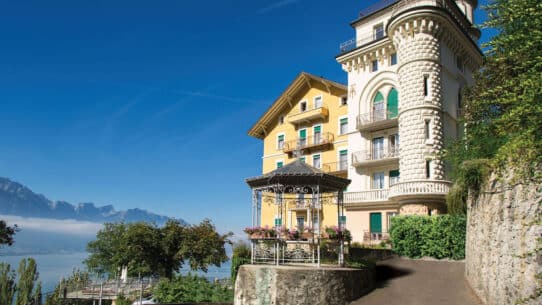
Surval Montreux
Geographic location
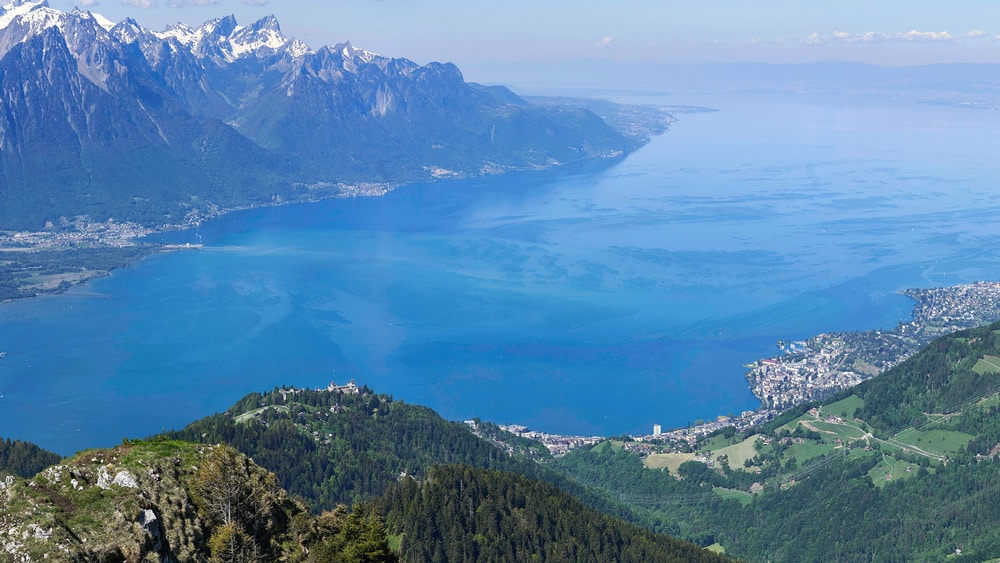
The Montreux-Riviera region is home to one of the highest concentrations of private boarding schools in Switzerland. Its location between Geneva and Lausanne, its lakeside setting, and its access to a variety of activities (skiing in winter, sailing in summer) make it a sought-after environment, which is reflected in the tuition rates charged.
Schools in German-speaking Switzerland or in less exposed regions sometimes charge lower tuition fees, but there are significant differences in terms of the international profile of the student body and the language of instruction.
Before focusing solely on price comparisons, it may be helpful to weigh the pros and cons of boarding school to ensure that this option aligns with the student’s actual needs and the family’s expectations.
Comparison with other countries and financing options
Compared to British or American boarding schools of a similar caliber, Swiss schools fall within a similar price range, or are even slightly less expensive for mid-range options. The advantage of Switzerland often lies in the country’s safety, stability, and political neutrality —factors that are important to international families.
In France, public boarding schools remain very accessible, but their international offerings cannot compare to those of private Swiss schools. The comparison must therefore be made on the basis of equivalent service levels.
When it comes to financing, scholarships remain rare at private boarding schools in Switzerland. A few schools offer merit-based financial aid, but it rarely covers more than 10 to 20% of total costs. Families generally have the choice between annual payment (sometimes with a discount) or quarterly payment, the latter being the most common.
It is also helpful to understand the differences between French and Swiss international schools before making a decision, especially for expatriate families who are considering several options.
A realistic budget for a year at a Swiss boarding school
In summary, here are the ranges to keep in mind based on the institution’s profile:
| School Profile | Estimated annual budget |
| Standard boarding school, local program | CHF 30,000 – CHF 50,000 |
| International boarding school, accredited programs | CHF 60,000 – CHF 80,000 |
| High-end boarding school with a low student-to-teacher ratio | CHF 90,000 – CHF 120,000+ |
For a conservative and realistic budget, it is advisable to estimate between CHF 60,000 and CHF 80,000 per year, all expenses included, for a reputable international school.
Regardless of your target range, setting aside a 15% to 20% buffer for unexpected expenses is a sensible precaution. Expenses related to activities, one-time medical care, or additional travel can add up faster than you might expect.
Finally, be sure to request a detailed, itemized quote from each institution you contact. To round out your research, you can use the institutions’ official sources to verify their accreditations, the programs they offer, and their admission requirements before taking any formal steps.
Investing in a Swiss boarding school goes beyond just the cost of tuition: it provides access to an international network, intensive exposure to multiple languages, and universities recognized worldwide. It is this comprehensive package that deserves to be evaluated over the long term, rather than based solely on annual figures.