



For a family, the choice between a boarding school in Switzerland and a boarding school in England depends above all on one central criterion: your child’s future geographical direction. If a British university is the goal, England offers a strong academic grounding. If the direction remains open and international mobility is a priority, Switzerland offers curricular flexibility and cultural diversity that few systems can match.
This choice commits several years of schooling and durably shapes a young adult’s profile. Both destinations enjoy a reputation for excellence, but their educational models, living environment and approach to diversity differ in concrete ways.
Here, we compare academic programmes, day-to-day boarding life, the make-up of student communities, and selection criteria based on your child’s profile. For an overview of the local offer, private boarding schools in French-speaking Switzerland are a useful starting point.
Two traditions of excellence, two distinct histories
British boarding schools are rooted in a centuries-old tradition. The “house” system, the culture of team sport, structured alumni networks—these all forge a strong national identity. Schools such as Eton, Harrow or Roedean embody this model: belonging to a community, passing on cultural codes, and preparing students to join the British elite.
Swiss boarding schools have followed a different path. Founded in the 19th century to welcome an international, European aristocratic clientele, they built their identity around neutrality, multilingualism and a certain discretion. The aim was not to train Swiss citizens, but to offer neutral ground for students from all over the world.
That is the key difference: the British boarding school forges a strong national identity; the Swiss boarding school forges an international identity. Neither is superior—everything depends on the family’s plan.
Academic programmes and qualifications
The British model: A-Levels and early specialisation
The British system is based on A-Levels: at 16, students choose 3 to 4 subjects that they will study in depth for two years. This early specialisation is a real advantage for entry to Russell Group universities or leading Oxbridge faculties, which value subject expertise.
In return, flexibility is reduced. A student who is still unsure about their direction, or who is considering studies outside the UK, may find themselves constrained by a highly targeted curriculum. A-Levels are recognised by many Swiss and American universities, but equivalence varies depending on the institution and the course of study.
The IGCSE, offered in both systems, provides a strong common foundation for students aged 14–16, whatever destination they choose afterwards.
The Swiss model: IB, American diploma and multiple pathways
Swiss boarding schools stand out for the range of qualifications offered in parallel: the IB Diploma, the American High School Diploma, A-Levels, and even a Swiss diploma depending on the school. This breadth directly addresses the uncertainty of many international families who do not yet know in which country their child will pursue higher education.
The IB Diploma is particularly well suited to this approach: 6 subjects over two years, complemented by CAS, the Extended Essay and Theory of Knowledge, it is recognised by more than 2,000 universities in 75 countries. In France, the United States and Switzerland, recognition is broad, even if each university applies its own equivalency criteria.
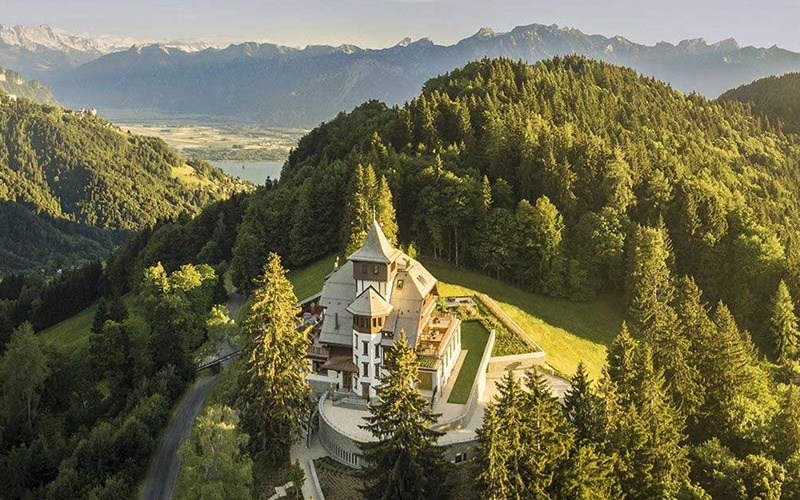
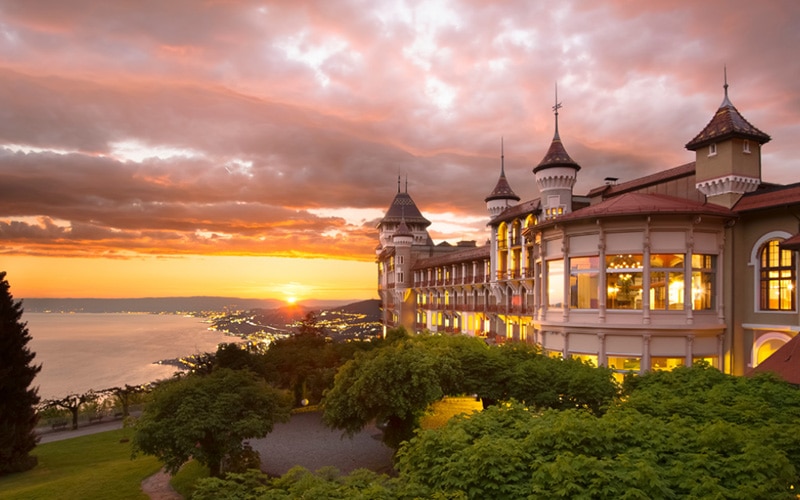
Surval Montreux illustrates this approach well. A 100% girls international boarding school based in Montreux, it welcomes young women aged 12 to 19 in a deliberately small community—around 10 students per class. The school offers IGCSEs, A-Levels, the American High School Diploma, and a Swiss Gap Year programme focused on languages, the arts and personal development.
A Foundation Year programme is available for students wishing to strengthen their English before entering qualification pathways. French is taught alongside, and a third language remains optional. This 100% girls environment, combined with the curricular flexibility specific to the Swiss model, allows each student to build a tailored pathway—without the pressure of premature specialisation.
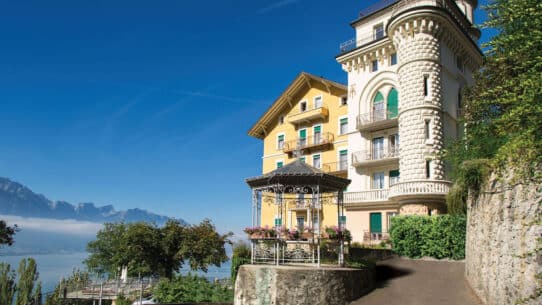
Surval Montreux
Living environment, setting and extracurricular activities
Daily life in a British boarding school is structured by the “house” system: each student belongs to a micro-community that organises their social, sporting and competitive life. Sport plays a central role—rugby, cricket, rowing, athletics—as do drama and a culture of debate. This framework builds collective discipline and a very strong sense of belonging.
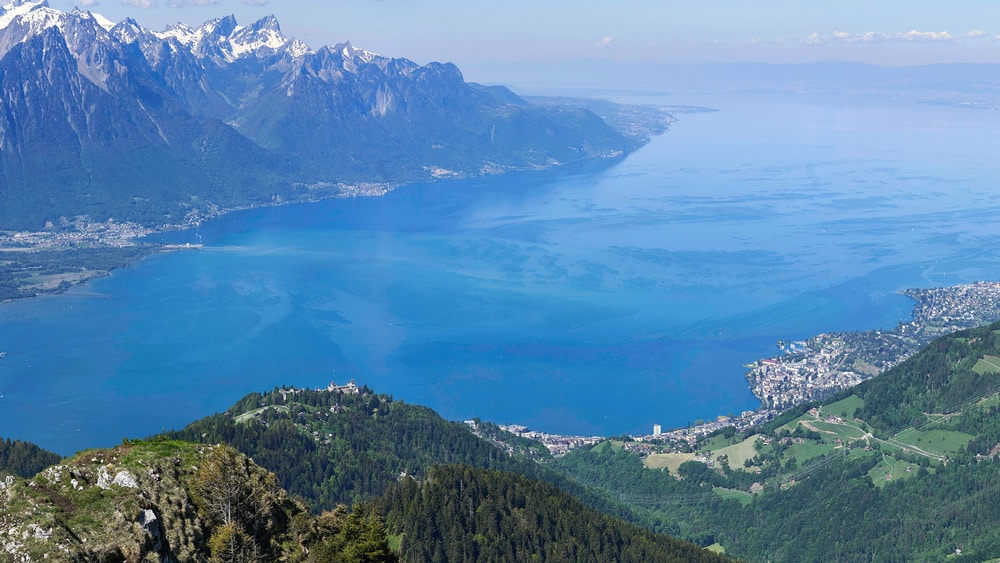
In Switzerland, the setting differs in its very nature. Boarding schools on the Vaud Riviera draw on an alpine and lakeside environment: skiing in winter, sailing on the lake, high-altitude hiking, and access to a rich cultural offering. National mix is often very pronounced—some schools welcome students from more than 50 nationalities, making everyday life a constant multicultural immersion.
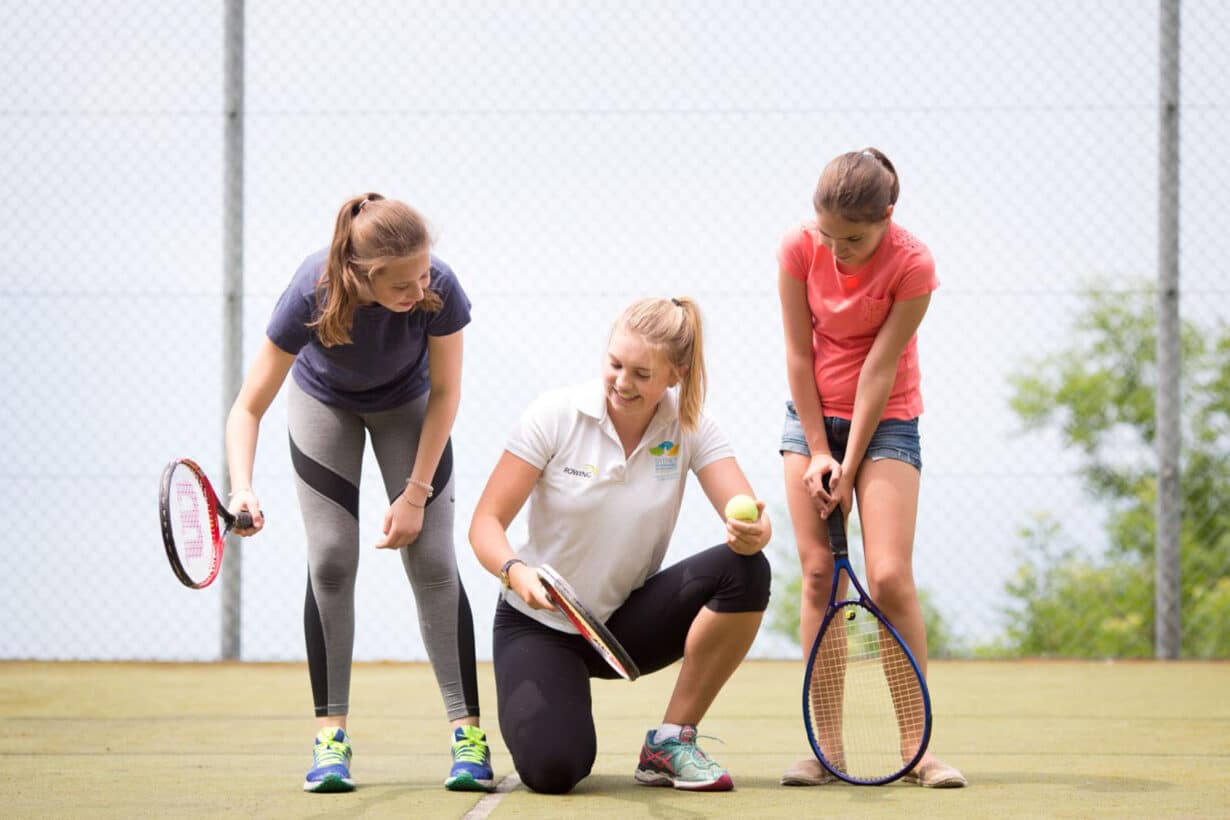
Both systems value sport and the arts as pillars of education—this is a genuine point of convergence. Their underlying logic differs, however:
- British boarding school: close-knit community, institutionalised traditions, structured internal competition
- Swiss boarding school: international openness, place-based activities, a more contemporary approach to wellbeing
For families wondering about the advantages and constraints of boarding school life, these concrete day-to-day dimensions deserve to be weighed as much as academic criteria.
Switzerland’s political stability and the safety of the Lake Geneva region are a significant decision factor for international families. The Vaud Riviera offers a serene, well-connected environment, away from the urban tensions that some major British cities can experience.
International diversity and networks
The make-up of student communities is one of the arguments most often cited by expatriate families. In large British boarding schools, British students remain the majority, with a varying percentage of international students depending on the school. Alumni networks are powerful and well structured, but their influence remains primarily rooted in the UK’s political and economic circles.
Swiss boarding schools have a noticeably different profile. National diversity is often greater: some schools on the Riviera welcome students from more than 50 to 60 nationalities, with country quotas that ensure a balanced distribution. Everyday multilingualism—French and English first and foremost—naturally integrates into exchanges between students.
For a family anticipating international mobility, this multicultural exposure is a structural advantage. The child learns to navigate very different cultural codes and to collaborate with peers from varied backgrounds—a skill increasingly valued in international professional environments.
Swiss alumni networks are less institutionalised than their British counterparts, but more geographically diverse. It is less a national network than a global one—which better matches the profile of families who choose Switzerland.
Selection criteria based on your child’s profile
Here are the main guidelines that can help steer your decision, depending on your family’s situation.
Choose England if: your child is a native English speaker or wishes to enter a British university, thrives in a structured and competitive environment, appreciates collective traditions, and has family or professional ties to the UK. A-Levels are then the most direct route to Oxbridge or the Russell Group.
Choose Switzerland if: your family is international and mobile, university plans remain open, your child speaks or is learning several languages, and you value a secure environment with small class sizes. The flexibility of the IB and the cultural diversity of Swiss boarding schools match this profile.
Special case for young women: some Swiss boarding schools offer a 100% girls environment designed to foster self-confidence and leadership. In England, schools such as Wycombe Abbey or Cheltenham Ladies’ College maintain this tradition, but they remain few in number. Surval Montreux illustrates this positioning on the Riviera: an all-girls setting, small class sizes, and a pedagogy focused on each student’s development.
For families wishing to explore this comparative reflection further, comparing education systems for your expatriate family can provide useful perspective.
The Vaud Riviera, a setting that makes the difference
The concentration of schools on the Vaud Riviera—from Montreux to Vevey, up to the heights of Caux—is a rare geographical reality. Few places in the world bring together so many top-tier international boarding schools within such a small area. This density reflects a tradition of educational hospitality dating back to the 19th century, consolidated over generations.
The region’s natural multilingualism extends learning beyond the classroom. The border between French-speaking and German-speaking Switzerland, proximity to Lausanne and Geneva, and access to leading international institutions—all of this creates a learning environment that few regions can offer. Paris is reachable in under 5 hours by TGV Lyria via Geneva; London in under 10 hours by rail.
Lake Geneva and the Alps are part of the programme. Skiing, sailing, alpine hiking, access to the Montreux Jazz Festival or Chillon Castle—these elements contribute to an education that goes beyond the strictly academic framework. The Vaud Riviera offers a balance between intellectual rigour and quality of life that matters for families entrusting their child to a school for several years. Research studies on international education models confirm that this living environment plays a structuring role in the development of boarding students.